Linear Work Orders
A Linear work-order flow with acceptance criteria, run status, evidence, and draft-PR links.
 Ship AIAccount
Advanced AI Engineering · Two-Day Workshop
From a Linear ticket to a tested, reviewable pull request.
Build a ticket-to-PR software factory with Linear, Vercel Sandbox, Workflow SDK, and AI SDK. Start from prepared blueprints and keep human review at the merge boundary.
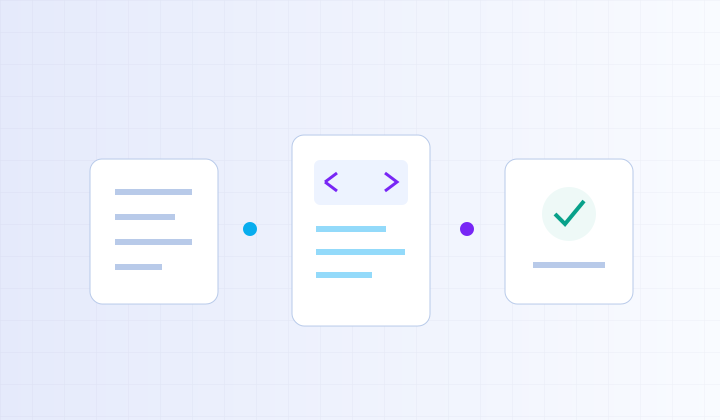 Ship AIWorkshopsTicket → Build → Verify → PR
What You’ll Build
A Linear work-order flow with acceptance criteria, run status, evidence, and draft-PR links.
An isolated Vercel Sandbox build that investigates a bounded issue, implements a change, and runs checks.
A durable Workflow SDK pipeline with AI SDK tool orchestration, approval pauses, and bounded retry behavior.
A tested ticket-to-draft-PR prototype, repository blueprint, regression cases, and an operator runbook.
Your Two-Day Build Plan
A planned sequence of guided labs, with breaks and time for review. Dates, daily times, and venue will be confirmed before paid registration.
Day 1
Review the blueprint, repository instructions, acceptance criteria, and credential boundaries.
Build the work-order intake and useful status updates from sample or approved tickets.
Run a small reproduction, inspect the repository, and prove the request before editing.
Use AI SDK tools and durable Workflow SDK steps to produce a candidate change and saved run evidence.
Day 2
Run tests and inspect the real diff from a fresh verification context.
Test retries, duplicate events, missing context, approval pauses, and cost limits.
Publish a reviewable change in a repository you control and link evidence back to Linear.
Demo one ticket-to-PR run, identify remaining work, and schedule your private implementation review.
Your Take-Home Kit
Adapt these blueprints to a small repository, run the supplied cases, and document what your team needs before a wider rollout.
Come Ready To Build
Developers, technical founders, engineering leads, and small product teams that already ship software with coding agents and want a repeatable delivery system.
Bring a laptop, GitHub and Linear accounts, a Vercel account, model API access, and a small TypeScript repository you can safely experiment on. You should be comfortable with Git, pull requests, Node.js, and basic tests. Use our starter repository if your company code cannot be shared.
Included With Your Ticket
Codebases preloaded with skills and best practices, designed to eliminate 80% of the friction.
Hands-on expert guidance and feedback on your own project.
Recordings, blueprints, slides, templates, prompts, checklists, and code emailed after the workshop.
A 30-minute private readiness review before the lab and two private implementation-review hours within 30 days afterward. We review one repository and your workflow evidence; this does not include done-for-you rollout or unlimited support.
The Build Stack
Linear tracks the work; Sandbox provides an isolated execution environment; Workflow SDK coordinates durable steps; AI SDK connects model calls and tools. GitHub holds the code and draft PR. This is an independent Ship AI workshop.
FAQ
A 30-minute private readiness review before the lab and two private implementation-review hours within 30 days afterward are included. Use them to scope one repository, review run evidence, and plan your next rollout steps. This does not include unlimited support or done-for-you implementation.
Yes. Agentic Engineering teaches the individual build workflow: worktrees, tests, browser checks, and skills. This advanced workshop connects ticket intake, durable orchestration, isolated execution, verification, and progress updates into a software-delivery system.
That workshop improves the reliability and operation of an existing AI workflow. Software Factory applies those ideas specifically to software delivery: turning a ticket into repository evidence, a tested change, a draft PR, and a Linear update.
The guided build stops at a tested draft PR and reviewed status update. Human approval controls merge and production release. We practice one bounded repository workflow; a complete autonomous engineering organization is outside the two-day scope.
No. This is an independent Ship AI workshop using those tools. It is not a vendor certification or a claim of sponsorship.
This is a two-day lab capped at 12 attendees. The date, daily schedule, and venue will be announced before paid registration opens. Join the free waitlist to receive the details.
The guided stack uses Linear for tickets and run updates; GitHub for code and draft PRs; Vercel Sandbox for isolated execution; Workflow SDK for durable steps; and Vercel AI SDK for model calls and tools. Supported connections depend on account plans and administrator approval. Sample tickets and a starter repository are available; the final setup guide will specify tested versions.
Admission does not include Linear or Vercel plans, model API usage, Sandbox compute, hosting, or other software costs. We start with a small bounded task and configure run budgets. Bring accounts you control; never share raw credentials in the workshop.
No. Waitlist signup is free. We’ll email you when the schedule and paid registration are ready, so you can decide whether to book. No payment is collected now.
Once paid registration opens, tickets will be refundable until the day of the event. If the event is cancelled, you will receive a full refund. Email hi@shipai.club with questions.
Something else on your mind? Ask us.
Your Workshop Pathway
Start with a useful agent, move into code-based workflows, then develop the engineering and reliability skills for a delivery system.
Find your starting point with the AI assessment →
A suggested route, not a required bundle. Choose the workshops that fit your experience and project; each ticket is separate.
Suggested PreparationFrom AI Prototype To Production
Get The Dates First
Tell us what you want to work on. We’ll email you when the schedule and registration details are confirmed.
Free to join. No payment or seat reservation yet.